Silver Halide Faithful: The British Labs Still Threading Real Film
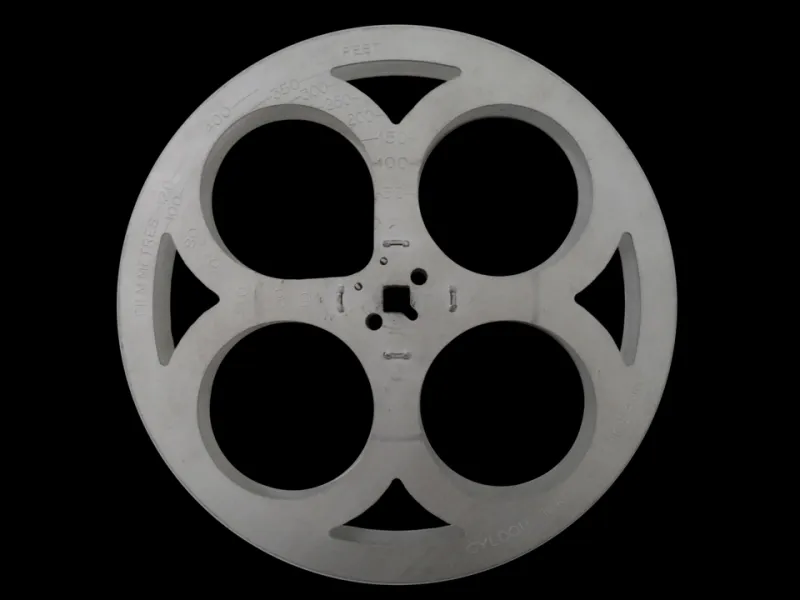
Photo: mannyisdead on Deviantart, CC BY 3.0, via Wikimedia Commons
Drive past the unit, past the industrial estate sign with half its letters missing, and you could be at any light-industrial business in Britain. Inside, it smells of chemistry and cold air. There is a machine that costs more than a house, and somebody leaning over a bench with a loupe, quietly swearing at a splice.
This is what remains of analogue film in the UK: a small, specialised, unexpectedly busy cluster of labs, scanners and restoration facilities that never quite shut down when everyone else did.
The call from a director who had seen too much digital
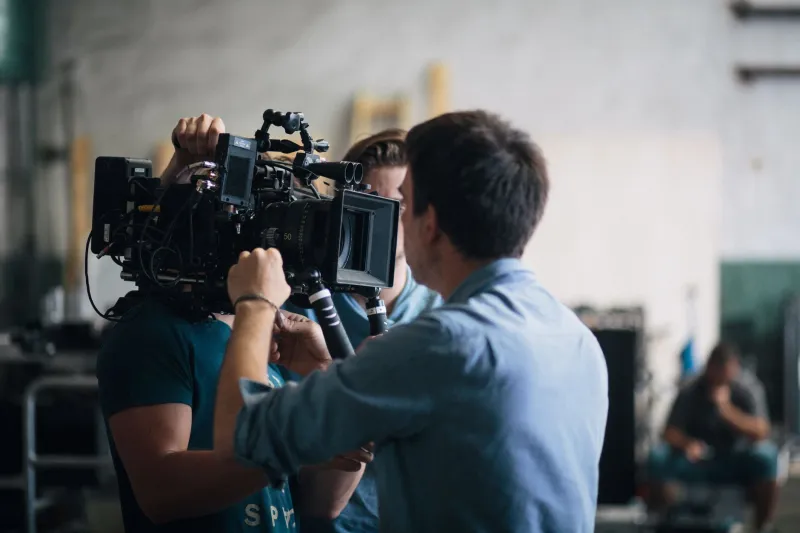
The revival isn’t nostalgia, the people who run these places insist. It is scheduling. Over the past few years, a steady stream of British and Irish features, high-end music videos and — particularly — advertising work has come back to celluloid, often for reasons that have nothing to do with looking vintage and everything to do with how a set behaves when the camera is running film.
Film costs money per second, and everybody on the floor knows it. Crews tighten. Takes become events. Directors describe a kind of focus that appears on a film set and evaporates somewhere around take fourteen on a digital one.
There is a practical dividend too. A 35mm negative scanned at high resolution holds highlight information in a way that gives a colourist room to work, and grain — real, photochemical grain — remains stubbornly hard to fake convincingly at the top of the market. For a certain kind of period drama or a very particular kind of advert, that texture is the product.
What actually happens in the dark
A lab is a chain of small, unforgiving steps. Film arrives from set, often in a battered changing bag, and goes into development — a process that is part chemistry, part theology. Temperature too high and the contrast drifts. Agitate inconsistently and the whole roll shows it. Nobody finds out until the neg is dry.
Then it is graded by eye, printed, or more likely scanned frame by frame on a machine that must be calibrated, cleaned and understood as a piece of optical equipment rather than a computer peripheral. Dailies get turned around overnight because a production needs to see the rushes before the next morning, and a lab that misses that deadline is a lab a producer will not call again.
Outside London, the geography matters. Several of the surviving operations sit in the home counties and the north of England, close enough to the big production hubs but far enough out for the rents to make sense. They are small employers with unusual skill profiles — technicians who can read a densitometer, maintain a wet lab, and troubleshoot a scanner that is older than most of the crew. Not the sort of job you can advertise for on a Tuesday and fill by Friday.
Heritage is a catalogue, not a cupboard
Half the workload is the past, and it is not gathering dust. Restoration houses up and down the country are steadily pushing British screen history back into circulation: early features, documentary footage, regional television, advertising archives, home movies donated by families who found a tin in the loft.
The craft here is genuinely forensic. A negative suffering from vinegar syndrome has to be handled, stored and — if possible — copied before it becomes unplayable. Nitrate needs a different set of precautions entirely. Colour that has faded unevenly needs to be reconstructed with restraint, because the temptation to make 1962 look like 2026 is always there and usually a mistake.
What has changed is the destination. Restored material is no longer just for a cinema retrospective with a Q&A and a warm white wine. It goes into streaming catalogues, anniversary re-releases, documentary montages, and — crucially — into the visual language of new films that sample archive footage the way musicians sample records. When a contemporary British feature opens with three minutes of restored 1970s footage, someone spent weeks making that look right.
The skills gap nobody scheduled
The worry in the sector is not demand. It is people. The generation that ran these machines through the 1990s is retiring, and the knowledge was never written down in a way that survives a handover email. Apprenticeships are being built, and some labs now train technicians partly for the love of it, but the pipeline is thin and the equipment is specialised enough that you can only really learn it by standing next to someone.
Which is why several of the houses have quietly become de facto teaching spaces, hosting students and curious DOPs who want to understand what happens after the clapperboard. Not recruitment, exactly. More like ensuring there is somebody left who knows which way the spool goes.
What it all says about 2026
The honest reading is that analogue is not coming back to take over. It is coming back as a choice — an expensive, deliberate, occasionally inconvenient choice that signals something to an audience about the kind of thing they are about to watch.
What the labs reveal is a wider truth about the UK industry: its depth lives in small, unglamorous, highly skilled outfits that do not show up in production spend headlines. A colourist, a negative cutter, a restoration technician, a scanner engineer — none of them will ever be on a panel, and all of them decide how British films look.
So next time a trailer promises to be “shot on 35mm”, spare a thought for the industrial estate, the cold air and the person with the loupe. They have already saved the take before you saw it.