Four Borders, One Budget: Inside the UK Co-Production Playbook for 2026

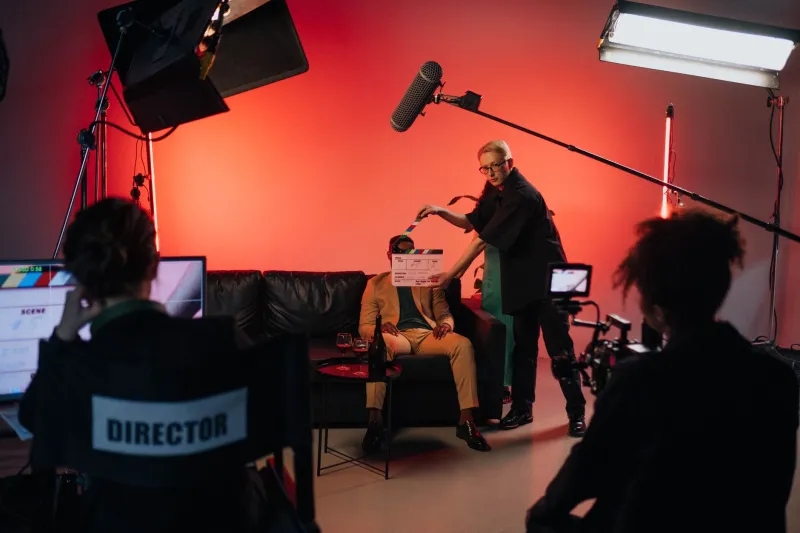
Photo: Starscream, CC BY-SA 3.0, via Wikimedia Commons
In a cramped Soho screening room in late October, three producers are doing something that looks suspiciously like a jigsaw puzzle. One has a German treaty partner on speakerphone. Another is moving £180,000 of post-production spend from Manchester to Toronto to qualify for a different rebate. The third is refreshing an inbox, waiting for a streamer to confirm a pre-sale that will decide whether the whole thing happens. Welcome to the 2026 co-production dance — less red carpet, more spreadsheet.
The three companies are not household names, and that is the point. Bristol's Marlow & Finch, Glasgow's Northlight Pictures and Leeds-London outfit Camber Films each have projects in the £2m–£6m range. Too big for a single UK financier to carry comfortably, too small for the streamers to fund alone without a partner. Their solution is the same one producers have used for decades, but with a 2026 twist: stitch together treaty partners, tax credits, pre-sales and cast attachments until the budget looks less like a gamble and more like a plan.
The three-way split that keeps everyone honest (or not)
Marlow & Finch is shooting a bilingual drama in the West Country and Brittany. Producer Priya Desai describes the finance plan as 'a three-legged stool with a fourth leg we keep in the cupboard'. The UK side brings the UK independent film tax credit and a small BFI Global Screen Fund award. The French partner brings a regional fund and a sales agent with a track record in arthouse theatrical. The third partner, a Canadian company, brings a treaty route and a post-production rebate.
'Co-production is not a funding tap,' Desai says. 'It is a series of compromises dressed up as a schedule. You are always asking: does this decision make the film better, or does it make the paperwork easier?'
The honest answer, she admits, is sometimes both. Moving a week of shooting to a partner country can unlock cash without changing the story. But moving the story itself to accommodate a partner is where projects get into trouble. 'If the script starts bending to the treaty, you can feel it on the page,' she says. 'The characters become tourists in their own film.'
Tax credits are not free money
Northlight Pictures is taking a different route. Its current project is a Scottish-set thriller with an Australian co-producer and a UK sales agent. The budget is just over £4m. The Australian partner qualifies for a location offset; the UK side claims the independent film tax credit. On paper, the numbers look reassuring. In practice, the cash flow is a nervous business.
'You do not get the tax credit on day one,' says Tom Reilly, a freelance finance executive who has worked on Northlight's last two productions. 'You get it after the audit. So you still need a completion bond, a cash-flow lender and a bridge facility. The credit improves the recoupment waterfall, but it does not pay the caterers on Friday.'
That is where pre-sales come in. A streamer pre-sale for a single territory can be enough to close the gap, but it comes with conditions: delivery dates, cast approvals, sometimes a say in the final cut. Reilly calls it 'a safety net with a hook in it'. The trick, he says, is to take the pre-sale money without handing over the creative keys.
Cast attachments are currency
Camber Films is assembling a period drama with a French co-producer and a German fund. The project has a strong script, a first-time director and a budget that is, in producer Elena Wray's words, 'ambitious but not delusional'. What it does not have yet is a name.
'A cast attachment can change the entire finance plan,' Wray says. 'One actor with international appeal can unlock a pre-sale, a distribution advance and a better tax-credit estimate. But you have to be careful. A name that does not fit the role can make the film feel like a tax vehicle with a red carpet.'
Wray's team now builds a 'cast wish list' alongside the budget, not after it. They ask the sales agent which names are genuinely pre-saleable in which territories, then work backwards. It is less romantic than it sounds. It is also how a £3.5m film ends up looking like a £6m one on screen.
Where the UK voice gets lost
The risk in all this choreography is not financial collapse. It is creative drift. When a project is answerable to a UK tax authority, a French regional fund, a Canadian co-producer and a streamer's acquisitions team, the script can start to sound like it was written by committee. Characters explain things they already know. Locations become generic. The distinctive edge that made the project interesting in the first place gets sanded down.
Desai has a rule: the lead producer holds the voice, and the writer stays in the room. 'You can negotiate the schedule, the cast, the location of the grade,' she says. 'You cannot negotiate the reason the film exists. If you do, you have made a co-production that nobody wants to watch.'
Northlight's approach is more pragmatic. It builds a 'red line' document at the start of financing: three things that cannot change, whatever the partner asks. For its current thriller, the red lines are the Scottish setting, the lead character's dialect and the ending. Everything else is up for discussion.
The dance continues
None of this is new. UK producers have been co-producing for decades, and the treaty network is well worn. What feels different in 2026 is the number of moving parts. Tax credits have become more generous but more conditional. Streamers are more cautious about pre-sales. Cast attachments are more important than ever. And everyone is trying to make a smaller budget look bigger without pretending it is something it is not.
Back in the Soho screening room, the German partner has signed off. The Toronto post-production move is happening. The streamer has asked for a meeting. The three producers pack up their laptops and head for the pub. The jigsaw is not finished, but it is starting to look like a picture. Whether it is a good picture is still down to the script.
For now, the co-production dance goes on.