You Hear the Story First: Inside a UK Sound Department
Photo: Unknown authorUnknown author, Public domain, via Wikimedia Commons
Sound is not the cleanup crew of filmmaking. On a UK set, it is often the first version of the story an audience will feel. A door click, a wet pavement, the hush before an argument: these are creative decisions, not technical accidents. To see how they are made, Wilson Worldwide traced a representative scene — a tense doorstep confrontation on a narrow, listed high street in a British town — from the first recce to the final mix.
The recce starts with what you can hear
Before a camera is rigged, the production sound mixer walks the location and listens. Not just for the obvious problems — passing buses, a nearby chiller unit, a church bell that arrives every quarter hour — but for the character of the place. A covered alley might give a hard, flinty echo. A Georgian terrace might swallow dialogue in soft furnishings. A high street on a damp November morning has a particular hush under traffic noise.
In the UK, that listening is also a negotiation with the building itself. Listed properties can rule out drilling, sealing windows or running cable across protected facades. Tight pavements leave little room for a boom operator, a camera team and the public. Weather adds another layer: wind that ruins a microphone one minute and rain that threatens the rig the next. The sound team plans around all of it, often before the director has finalised the shot list.
On set: capture performance, not perfection
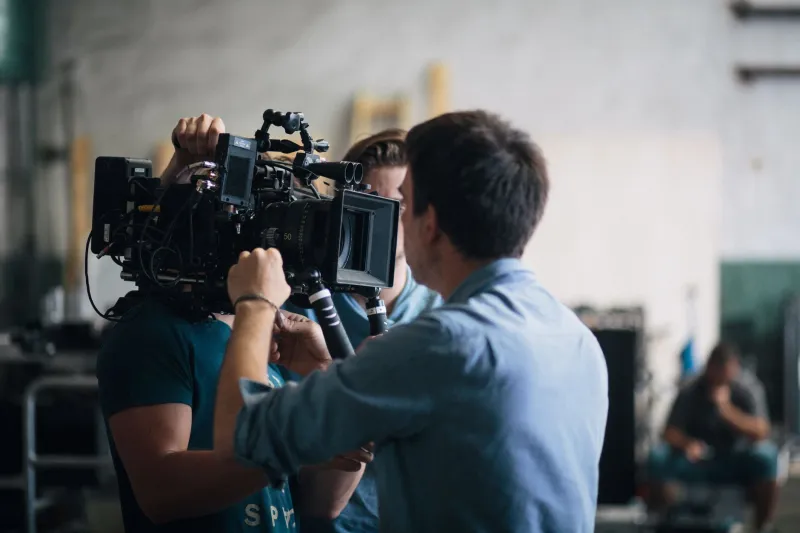
The boom operator is the department's most visible invisible craftsperson. The pole has to follow a performance without casting a shadow, brushing a costume or drifting out of the actor's eyeline. On a cramped British street, that might mean standing in a doorway, leaning around a parked car or working from a first-floor window with the boom angled down into the scene. The production sound mixer, meanwhile, is balancing radio microphones hidden in wardrobe, a boom track and the practical noises of the location.
By 2026, the kit is more forgiving than it used to be. Recorders commonly run 32-bit float, wireless systems are more robust, and timecode and metadata workflows help editorial find the right take quickly. But technology has not removed the judgement. A mixer still has to choose between the intimacy of a boom and the coverage of a radio mic. A boom operator still has to hear when a coat rustle is about to ruin a line. The sound report still has to tell the story of what was captured, what was compromised and what might need attention later.
That is why the best set sound is not about collecting clean audio at any cost. It is about protecting the performance. If an actor drops a line to a whisper, the sound team tries to make that whisper usable. If a door slams on cue, they record it properly rather than hoping foley will save it. Wild tracks — room tone, footsteps, cloth, props — are gathered like spare parts for the edit. The scene is being built in the moment, not merely documented.
The edit room: dialogue is a performance
In post, the dialogue editor receives more than one track. They receive choices. A line may be best in take three for performance and take five for clarity. A rustle might be removed with spectral repair, or covered with a fill from another angle. The aim is not to make the scene sound synthetic. It is to keep the audience inside the performance without distracting them with the mechanics of capture.
ADR is part of the toolkit, but it is not the default. UK sound teams tend to treat replacement dialogue as a last resort, because a booth performance can lose the breath and interruption of the original. Foley artists add the physical detail: the scuff of a shoe on wet stone, the rattle of a letterbox, the soft weight of a coat. Ambience records from real British locations — market chatter, distant traffic, rain on awnings — give the mix a sense of place that a library effect often cannot.
The final mix: making a street feel like a character
The re-recording mixer brings those layers together. Dialogue sits at the centre, but it is shaped: EQ to cut through traffic, compression to keep quiet lines audible, reverb to place a voice in the street rather than on top of it. Music and effects are balanced around the story, not simply stacked underneath it. A listed high street has an acoustic fingerprint, and the mix can make it feel warm, exposed, claustrophobic or eerily empty.
This is where sound becomes storytelling rather than repair. A distant siren can raise tension. A sudden absence of traffic can make a doorstep feel isolated. The audience should not notice the craft; they should feel the scene. That is the quiet bargain of the UK sound department. It builds the atmosphere before you hear a word — and then makes sure you never hear the work behind it.
For newcomers, the route in is rarely glamorous. Runner work, technical experience, a willingness to learn on set and a good ear matter more than a showreel of plugins. The department rewards people who can listen, anticipate and stay calm when the weather turns. In a year when UK productions are juggling tight schedules and tricky locations, that calm is a creative skill in itself.