Ninety Seconds to Save the Show: How UK Producers Build a Cold Open

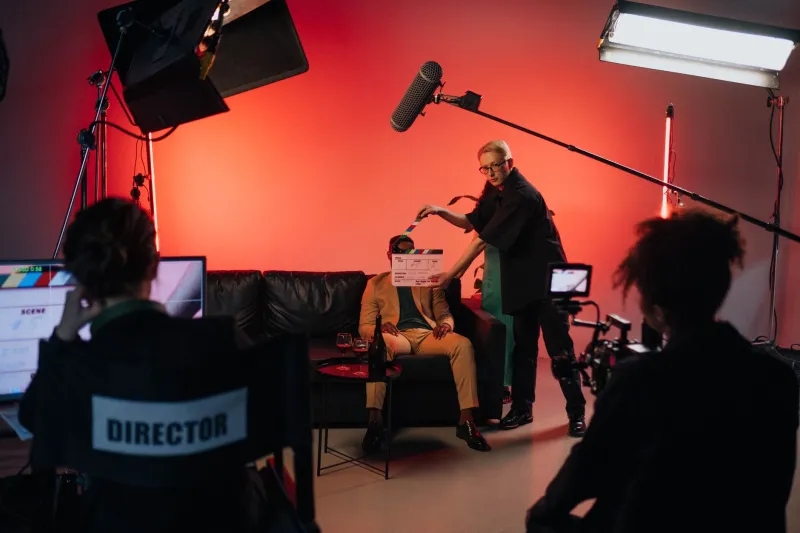
Photo: Paulnandita, CC0, via Wikimedia Commons
There's a moment in every edit where the show stops being a script and starts being a pitch. It usually arrives somewhere in the first ninety seconds, and in 2026 it carries more weight than it ever has. Autoplay means the first frame competes with a thumb; streaming interfaces mean a viewer can leave without ever seeing a title card; and the old industry wisdom about giving a drama three episodes to find its feet has been replaced, in practice, by a three-minute probation.
'We're not fighting other shows any more,' says Ruth Okonjo, a producer at a Leeds-based scripted company. 'We're fighting the sofa, the phone, the kettle. The cold open is us saying: stay for one more minute, and then one more.'
Why ninety seconds specifically
It's an arbitrary number with a real logic behind it. Ninety seconds is roughly how long a viewer will tolerate not knowing what kind of thing they're watching. Ambiguity is a pleasure for about a minute. After that it becomes anxiety, and anxiety is a reason to press back.
So the cold open has a dual job: it must pose a question and simultaneously promise a tone. A scene can withhold plot indefinitely, but it cannot withhold genre. The audience needs to know whether they're allowed to laugh.
The writer's rule: start late, leave early
Most cold opens that fail do so because they start a scene too early. Two characters greet each other. One asks how the weekend was. The audience is already reaching for the remote.
'Enter the scene as late as you possibly can,' says screenwriter and script editor Priya Raval. 'If the first line of dialogue could plausibly be the fourth, cut the first three. Almost every draft I read has a warm-up lap nobody asked for.'
The better structural move is to open on a consequence and let the cause arrive later. A room already in chaos. A decision already made. A person already lying. The audience's brain does the work of catching up, and that effort is itself enjoyable — it's the same mechanism that makes a good joke land.
What writers should resist is the trailer cut: five disconnected shots, a music sting, a smash to title. It reads as advertising rather than storytelling, and viewers have become fluent at spotting it.
The edit is where retention gets designed
Editors talk about the first ninety seconds as a separate discipline from the rest of the episode. 'You cut it four or five times more than anything else,' says Danny Sarpong, an editor who has worked across drama and comedy for a decade. 'And the notes are always the same: where does my eye go, and when does it get bored?'
His practical toolkit is unglamorous. Trim the first two seconds of every shot until the sequence feels rude. Let one shot run longer than is comfortable, then cut hard. Never cut on the obvious beat if a half-beat later is available. And resist the urge to solve a flat opening with music — a cold open that only works with a needle drop is a cold open that doesn't work.
Sound carries more than picture does
Ask any re-recording mixer and they'll tell you the same thing: viewers will forgive an ugly frame but not an unclear one, and clarity begins with sound. A cold open should establish its acoustic world immediately — a specific room tone, an off-screen voice, a silence that feels deliberate rather than empty.
'Ambient silence is terrifying if you've set it up right,' Sarpong says. 'You don't need a monster. You need a fridge humming in a room where a fridge shouldn't be.'
Comedy plays by different rules
In comedy the cold open is often a self-contained sketch — a small, complete comic idea that ends on a turn and hands over to the titles. The discipline is brutal: no character who needs explaining, no premise that requires setup, and a last line that inverts what the audience thought they were watching.
Fee Hargreaves, who produces comedy out of Manchester, reckons the biggest mistake is mistaking pace for energy. 'Fast isn't the same as funny. You can have a slow cold open that works if the tension is real. What kills you is a scene where nobody wants anything.'
Her rule for the writers' room is simple: if you can't describe what the character is trying to get in the first ten seconds, you haven't got a cold open — you've got a trailer for one.
The 2026 twist: testing the first frame
What's genuinely new this year is how early the cold open gets tested. Platform previews, thumbnail A/B trials and audience research now mean the opening is scrutinised long before a frame is graded, and producers are increasingly asked to deliver the first three minutes as a standalone asset for marketing.
That has an upside and a trap. The upside is that openings are getting leaner and more confident. The trap is designing a show to peak in ninety seconds and then coast — a cold open so good it makes the following forty minutes feel like admin.
The best ones, in the end, do something simpler. They establish a person, a pressure and a promise, and they get out. Ninety seconds is plenty of time to make someone care. It is not much time at all to explain yourself.