Beyond the M25: Six Regional Studios Quietly Redrawing Britain's Screen Map
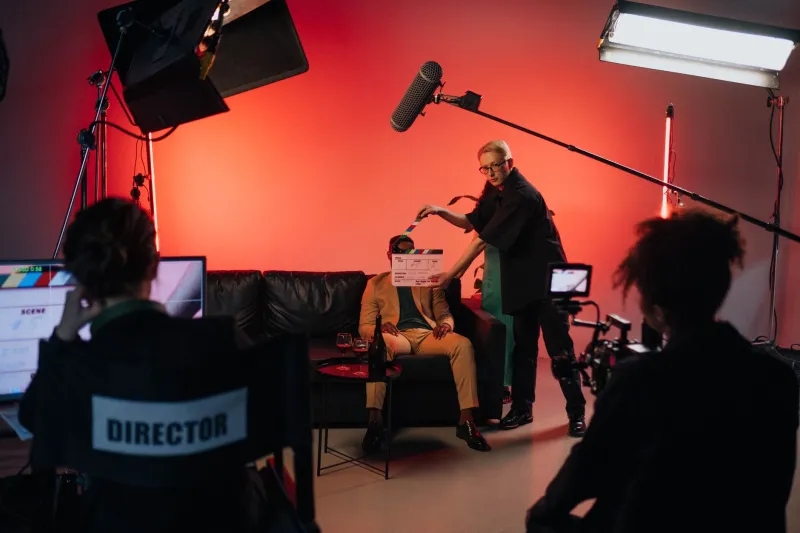
Ask anyone outside the industry to picture a British film set and you'll get the same answer: a Victorian terrace dressed as the East End, a Soho grading suite, a queue for coffee somewhere off Great Portland Street. That picture is roughly fifteen years out of date. In 2026, a decent slice of the UK's most interesting work is being shot within walking distance of a retail park in Sunderland, a canal-side warehouse in Leeds or a former shipyard on the Clyde.
London hasn't lost its grip — it still hoovers up the majority of production spend, and the post houses of Soho remain the centre of gravity for finishing. But the arithmetic has shifted. Streamers need volume, broadcasters are held to out-of-London commissioning targets, and the 34% Audio-Visual Expenditure Credit (plus the 53% enhanced credit for independent films budgeted under £15m) has made the UK attractive enough that producers can afford to be choosy about where they base themselves. The result is a network of hubs that no longer feel like satellites.
Here are six of them, and the companies making the case.
Cardiff: the co-production capital
Wales has quietly built the most complete production ecosystem outside the South East. Roath Lock and Wolf Studios give Cardiff serious stage capacity, S4C provides a steady flow of Welsh-language commissions, and the resulting crew base is genuinely bilingual — a practical advantage when a bilingual drama can sell twice.
Taff Bank Pictures, a Cardiff-based outfit founded in 2019, has leaned into that. Producer Mared Lewis describes the company's slate as 'stories that only work if you can hear the street they came from'. Their latest, a four-part thriller shot between Grangetown and the Valleys, was pre-sold into three territories before the final block was graded. 'The Welsh-language version isn't a dub or an afterthought,' Lewis says. 'We shoot it as a primary language on set. That changes the rhythm of the performances, and buyers can feel it.'
The practical note for anyone considering Cardiff: crew depth is excellent in drama, thinner in large-scale physical production, and Cardiff's rail links west are slower than the map suggests. Budget for travel days.
Glasgow: city as character
Glasgow has spent a decade perfecting the trick of playing itself and everywhere else. Pacific Quay anchors the factual and entertainment side, while a steady stream of drama has turned the city's grid into a standing set. Clydeside Pictures, based a short walk from the water, has built a reputation for shows that use the architecture as narrative scaffolding rather than backdrop.
'We stopped writing generic interiors,' says producer Callum Doig. 'If a scene can happen in a tenement close with the right light coming through, we write it there. It's cheaper and it's better.'
That instinct has commercial value. Glasgow crews are used to working fast and in tight spaces, and the city's screen agency has become unusually good at smoothing permits. The bottleneck, as ever, is studio space — demand still outruns supply.
Leeds: the Yorkshire engine
Channel 4's move north gave Leeds a commissioning anchor, and Versa Leeds Studios gave it the floors. Screen Yorkshire's investment fund has been doing the quiet, unglamorous work of getting projects to a point where a streamer will look at them.
Aire Valley Films, a Leeds-based scripted company, has made regional specificity its house style. Producer Nadia Brook argues that the universality everyone chases in development is usually a by-product: 'You don't get global by writing global. You get global by writing so precisely about a place that somebody in Osaka recognises their own mum in it.'
The Yorkshire advantage is geographic: Manchester, Sheffield and Hull are all within reach, so a single production can shoot in three visual identities without a flight. The disadvantage is that experienced HETV crews are stretched, and poaching from Manchester is now an open secret.
Belfast: the long game
Belfast Harbour Studios changed the scale of what Northern Ireland could host, and the crew base that grew up around the big-budget fantasy years didn't disperse when those shows wrapped. Northern Ireland Screen has been strategic about keeping that talent working, mixing returning series with indigenous film.
Lagan Shore Pictures, a smaller outfit operating out of the city, is a good example of the second wave. 'We inherited a crew that had worked at a level most UK regions never get near,' says producer Orlaith McVeigh. 'The challenge is giving them reasons to stay when the mega-productions go quiet.'
Their answer has been volume over scale: smaller budgets, tighter schedules, and a deliberate policy of hiring first-timers in every department.
Bristol: the craft end of the market
Bristol is where the UK's natural history tradition, an animation cluster and a growing scripted scene overlap. The Bottle Yard provides the stages; the city provides a deep bench of speciality craft — model-making, motion control, sound design.
Avon Gorge Productions has carved a niche in hybrid work, blending live action with animation and effects at a modest budget. 'We can hold a whole project in one city,' says producer Tom Vellacott. 'Writer, director, animation, grade, mix — all within four miles. That's not a lifestyle choice, it's a schedule saving.'
Sunderland: the newest room in the house
Crown Works has given the North East something it has never had at this scale: purpose-built stage capacity, with a skills programme attached. Wearside Works, an independent production company in the city, is betting that proximity to that facility will keep local talent local.
Producer Jodie Ramsey is blunt about the maths: 'Young people here used to leave at twenty-two to work in Manchester or London. Now they can do a runner's job, then a trainee job, then a floor job, and not move house.'
What the hubs still need
A word of caution for anyone seduced by the map. Regional incentives are not a magic multiplier; there is no separate regional uplift that makes a Cardiff shoot 10% cheaper than a London one. The savings come from the cost base, the goodwill of local authorities, and the fact that a facility with space will negotiate.
The genuine constraint is people. Crew depth, childcare, public transport for 5am call times, and affordable housing near studio sites are the things that turn a production cluster into an industry. Several hubs are quietly working on all four. If they succeed, the next decade of British screen won't be London with satellites. It'll be a genuinely national business — and the stories will be better for it.