Dust, Rights and the Perfect Frame: Meet the UK's Footage Finders
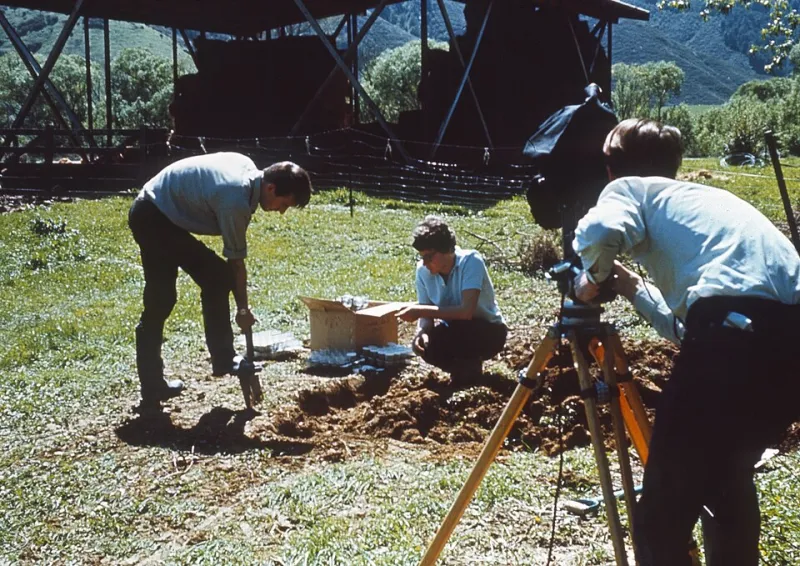
Photo: Department of Scientific and Industrial Research , CC BY 4.0, via Wikimedia Commons
A script asks for twelve seconds of a rainy bus queue in 1970s Birmingham. Not any bus queue. It needs the right coats, the right signage, the right amount of municipal gloom. The director wants it to feel true. The researcher knows that "true" is a chain of phone calls, catalogue searches and licence negotiations stretching from a regional film archive to a rights holder's spare bedroom.
Welcome to the unglamorous, indispensable world of the UK archive producer. These are the people who hunt down the footage that makes a scene land, then persuade everyone involved to let it be used. In 2026, with audiences more suspicious of images than ever, their job has become part detective work, part legal puzzle and part authenticity consultancy.
The brief is never just a clip
Archive researchers rarely get a neat shopping list. A factual drama about a 1980s council scandal might need news bulletins, local election coverage, factory gates, pub interiors and a shot of a specific road before it was pedestrianised. The researcher translates that into archive language: collection names, regional ITV libraries, local authority records, newsreel catalogues, amateur film collections and the holdings of the BFI National Archive.
That means knowing that the North West Film Archive may hold a mill-town procession the national news missed, or that the National Library of Scotland Moving Image Archive can yield a ferry crossing that no stock library would ever index properly. It means understanding that local television reels often carry the texture a drama needs: the wobble, the weather, the accents in the background.
And it means picking up the phone. A lot. Archive producers talk about building a mental map of who holds what, who answers emails and who needs a written request posted through the door. The best researchers are part librarian, part diplomat.
The legal jigsaw
Finding the clip is only half the battle. Clearing it is where projects can stall. UK archive clearance involves layers: copyright in the film itself, rights in any music, performer rights, and sometimes donor restrictions attached to amateur or community collections. A local news reel may be owned by a broadcaster, but the letter that explains its use might sit with a regional archive. An attic find may come with a family keen to help but no paperwork at all.
Fair dealing can cover some uses, but factual dramas and documentaries rarely fit neatly into a box. Clearance specialists often describe the work as assembling a chain of permissions. Orphan works, where the rights holder cannot be traced, need careful risk assessment. Budgets are built around the possibility that the perfect shot is simply too expensive or too tangled to use.
In 2026 there is a newer pressure: proving the image is what it says it is. With AI-generated footage now part of the noise, broadcasters and streamers want provenance trails. Archive houses are increasingly asked about scan metadata, source reels and chain of custody. Researchers are being drafted into conversations about C2PA labelling and authentication as much as copyright. The clip has to be clearable and credible.
Restoration as evidence
Restoration can rescue a scene, but it can also create suspicion. Grain removed too aggressively, frames interpolated too smoothly, and a 1970s street starts to look like a period theme park. Archive producers and post houses now talk about restraint: cleaning the dust, stabilising the gate weave, preserving the texture that tells viewers this is a document, not a reconstruction.
That texture matters. A slightly soft 16mm transfer can do more for a factual drama than a pin-sharp upscale. Audiences may not know the difference between a film scan and an AI-assisted repair, but they can smell a fake. In a year when every trailer seems to carry a disclaimer about synthetic media, the grain is doing quiet credibility work.
Good archive teams also document their choices. If a clip is cropped, recoloured or slowed down, the paperwork should say so. If a scene uses a still because no moving image survives, the production should be honest about it. The audience is forgiving of gaps. It is less forgiving of being sold a fib.
When the footage isn't there
Sometimes the archive says no. The event was not filmed. The reel is lost. The rights holder wants a fee that could feed the second unit for a week. This is where archive research becomes creative development. Producers turn to photographs, letters, audio recordings, newspaper pages, maps and carefully labelled reconstruction. A documentary might hold on a still while a witness speaks. A drama might shoot the scene in a way that suggests the missing footage rather than faking it.
The line is consent and transparency. Using an AI-generated image as a placeholder is one thing; passing it off as archive is another. UK broadcasters and streamers have tightened their language around synthetic content, and archive producers are often the ones flagging when a director's "just for the mood board" idea could become a compliance problem.
The attic factor
For all the databases and catalogues, some of the best finds still come from people. Regional archives run donation days. Local historians tip off researchers about a box of Super 8 in a garage. Families hand over films of street parties, factory outings and long-demolished housing estates. These collections are not just filler; they are the visual memory of places that national news never covered.
That material comes with responsibility. Researchers check consent, talk to donors and make sure the people on screen are represented fairly. A community film can make a scene feel true, but it can also expose private moments. The best archive work treats those reels as someone's life, not just content.
So the next time a factual drama makes you feel you are standing in a vanished Britain, look at the edges of the frame. The bus queue, the shop sign, the weather. Somewhere behind it is a researcher who found the can, cleared the rights, argued about the grain and decided that twelve seconds of ordinary life was worth the paperwork. That is the craft of truth on telly. And in 2026, it is more valuable than ever.