The Chip That Wouldn’t Die: Inside the UK Kitchen Teams Cooking for Camera
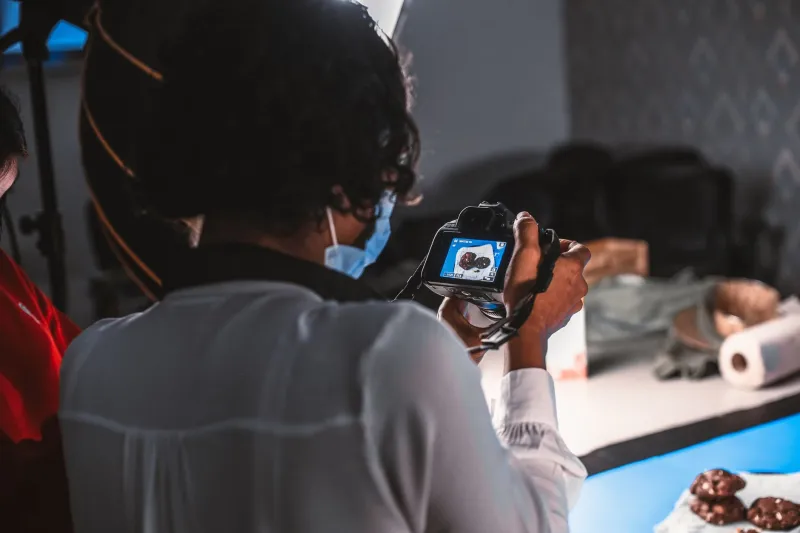
On a wet Tuesday in Salford, a plate of chips is having a crisis. It is 9.42am, the camera is on a long lens, and the director wants the steam to curl left. The chips — golden, skin-on, arranged like they’ve just tumbled from a Friday-night paper — have already been photographed, swapped, warmed and rejected twice. The food stylist leans in with tweezers and moves one chip two millimetres to the right. ‘That’s the one,’ she says. It is not the one. By lunch, it will be the ninth one.
Welcome to the unglamorous, faintly sticky world of UK food styling: the home economists, prop-house cooks and on-set specialists who make television dinners look alive. They work in the gap between appetite and arithmetic. A plate has to look hot, fresh and generous while sitting under lights for six hours. It has to match the shot before and the shot after. And it has to be safe enough that an actor can put it in their mouth without a trip to A&E.
More than a pretty plate
Food styling is often mistaken for fancy plating. In the UK, it is closer to logistics with a palette knife. A food stylist shapes what the camera sees. A home economist tends to the wider kitchen: developing recipes, costing them, scaling them for a shoot, and making sure a character can plausibly cook the thing on a BBC budget.
‘People think we spend all day making cakes,’ one stylist tells me, scraping a congealed gravy from a saucepan. ‘Most of the time I’m counting peas.’
That is not a joke. Continuity is the whole game. If a character eats three chips in a wide shot, the close-up plate needs three chips missing. If a Sunday roast is carved in episode two, the same joint has to look carved in episode four. The answer is rarely one heroic plate. It is a system: a hero plate for close-ups, a swap plate for wides, and a spit plate for actors who have to chew without actually eating.
The chip ledger
Back on set, the chip plate has entered the ledger. Every movement is logged. A runner holds a phone with a continuity photo. The script supervisor checks the angle. The stylist checks the gloss. A hairdryer hums somewhere off-camera, aimed at a bowl of soup that needs to look hotter than it is.
Steam is its own small industry. Kettle water, glycerine, a microwave and a cotton wool bud can create more atmosphere than a working kitchen. Ice cream is often mashed potato or a careful mix of shortening and icing sugar. A roast chicken can be a real bird, a silicone double or a supermarket bird with a tan. The camera does not care. It cares about shape, shine and the way a chip catches the light.
‘You can’t just cook something and put it down,’ says a home economist who has worked on UK dramas and food shows. ‘Under tungsten, a tomato looks like a bruise. Under LED, gravy goes grey. You’re lighting for a plate as much as a face.’
Inside the prop-house kitchen
Away from set, the work moves into a prop-house kitchen: a rented unit in west London or a converted garage in Leeds, shelves stacked with tins whose labels have been removed. Here, period accuracy meets supermarket reality. A 1970s dinner party needs a prawn cocktail, a Black Forest gateau and a hostess trolley. It does not need a real cream filling that will collapse under lights. A 1940s wartime scene needs ration-book restraint, but the loaf still has to look like bread rather than plaster.
Budget tricks are everywhere. Brown sauce for gravy. A little washing-up liquid in a glass of lager to keep the head. Hairspray for shine on fruit. A fake roast dinner can cost less than a real one and survive eight hours under a warm lamp. The stylist’s job is to know which corners can be cut and which ones will end up on a close-up.
Allergies sit at the centre of the conversation. If an actor is going to eat, the food has to be edible, labelled and safe. Nut-free, gluten-free and vegan requests are now routine. Shellfish is a red flag. A prop plate may look like dinner, but it is not dinner. The best kitchens run a clear line between the two.
Why the chip matters
Food is story. A full English can tell you more about a character’s hangover than a line of dialogue. An empty fridge can do more than a monologue about poverty. A perfect roast can make a family look like it is holding itself together.
In 2026, with budgets tight and shooting schedules squeezed, that craft is about making less look like more. The chip that would not die is not really about a chip. It is about time, money and the stubborn belief that a plate on screen should feel like somewhere real people might sit down and eat.
At 4.15pm, the director finally gets the shot. The steam curls left. The chips look hot. The actor takes a bite and says the line. The stylist watches, tweezers in hand, and does not relax until the camera moves on. Then she reaches for the next plate.