The Art of the Almost: Inside Britain’s Stunt Rehearsal Rooms
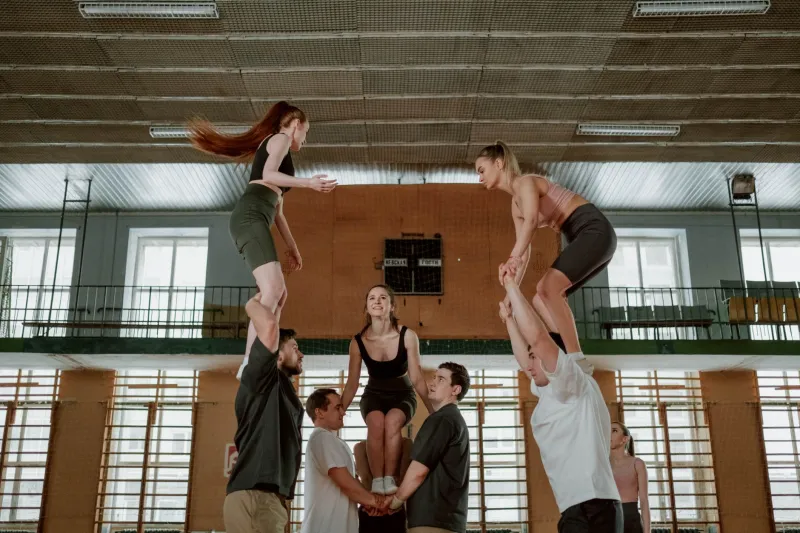
On a damp Tuesday morning in a converted warehouse outside Cardiff, a stunt performer is falling off a kitchen counter. Not once. Not twice. Eighteen times. Each time, she lands on a mat that has been dragged into position by three people who are not watching the fall. They are watching her feet. Then her hips. Then the mat. Then the director’s face.
This is the unglamorous heart of British action: the rehearsal room. Long before anyone shouts “action” on a high-end TV set or a Pinewood stage, stunt coordinators, riggers and performers have already built the fall, broken it into pieces, argued about the pieces and put it back together again. The goal is not to make danger look easy. It is to make danger look real while keeping every inch of it under control.
The first fall is always the slowest
“You rehearse the bit before the bit and the bit after the bit,” says Ruth, a coordinator who has spent two decades working across British film and television. “The fall itself is often the shortest part of the day. The story is in the stumble, the grab, the recovery. If the audience believes the stumble, they will believe the landing.”
In a rehearsal room, that means walking the sequence at quarter speed. A performer marks where a foot will go. A rigger checks where a wire will run. Someone measures the distance from the edge of a desk to the edge of a crash mat. The floor is covered in tape — different colours for different bodies, different moves, different versions of the same scene.
“People think we start with the big stunt,” says Dev, a fight coordinator based in Salford. “We start with the safe version. Then we make it look worse. That is the job. You add a slip, a shout, a near-miss. You take away the thing that would actually hurt someone.”
The best stunt teams rehearse in layers. First the feet. Then the hands. Then the eyeline. Then the sound. A punch that looks convincing on camera is usually a punch that misses by several inches, sold by a camera angle and a performer who knows how to snap their head back at exactly the right moment. A fall that reads as brutal is often a controlled collapse onto padding, with the hard bit happening off-screen or in the edit.
Paperwork before punches
Ask a British stunt coordinator what they spend most of their time on and you will not hear “adrenaline”. You will hear “paperwork”. Risk assessments. Method statements. Insurance conversations. Medical cover. Safety meetings. The British Stunt Register. HSE guidance. The unglamorous admin that turns a creative idea into something a producer can actually insure.
“The risk assessment is a creative document,” Ruth says. “It is not there to stop the shot. It is there to tell everyone what the shot actually needs — the mat, the spotters, the rehearsal time, the number of takes. If you cannot describe the risk, you cannot design the safety. And if you cannot design the safety, you cannot design the stunt.”
That paperwork shapes the day. A fight scene in a cramped pub might need more rehearsal time than a car roll, because the danger is not the vehicle — it is the corner of the bar, the low ceiling, the actor who has never thrown a punch before. A fall down a staircase might be built around a hidden mattress and a carefully angled camera, but it still needs a performer who can repeat the same collapse twenty times without losing the story.
“The compromise is the craft,” Dev says. “You want the shot. You also want the performer to walk away. So you find the version that gives you both. Sometimes that means a different lens. Sometimes it means a different cut. Sometimes it means the director has to accept that the audience does not need to see the impact. They need to feel it.”
Trust is the rig
In the rehearsal room, hierarchy is simple: the coordinator runs the sequence, the riggers own the equipment, the performers own the timing. But the thing that makes it work is trust. Performers rehearse with the same people because they need to know how someone moves, how they react, how they sound when they are about to miss a mark.
“You are not hiring a fall,” Ruth says. “You are hiring a person who can repeat the fall. That is a different skill. It is athletic, but it is also deeply technical. The best performers are the ones who can do the same thing for the twentieth time and still make it look like the first.”
That repeatability is what high-end TV schedules depend on. In 2026, British crews are working across a busy slate of returning dramas and new films, and the rehearsal room has become a production hub in its own right. Previs and virtual planning help, but they do not replace the mat, the tape and the person willing to fall off a counter eighteen times before lunch.
“Technology gives you information,” Dev says. “It does not give you trust. Trust comes from doing the thing slowly, in a room, with people who will catch you if the timing goes wrong.”
The shout is the last thing
Back in Cardiff, the eighteenth fall lands cleanly. The coordinator calls a break. Someone adjusts the mat. Someone else checks the camera. The performer stands up, rubs a knee, and asks if they can try a slightly different stumble on the next one.
That is the real work: not the danger, but the almost. The split-second miss. The controlled chaos. The fall that looks like it could go anywhere but has been designed, inch by inch, to go exactly where it is supposed to. By the time anyone shouts “action”, the stunt has already happened a hundred times in a room with no cameras, no audience and a very good pair of knee pads.