Forecast Optional: The British Crews Who Build Weather on Set

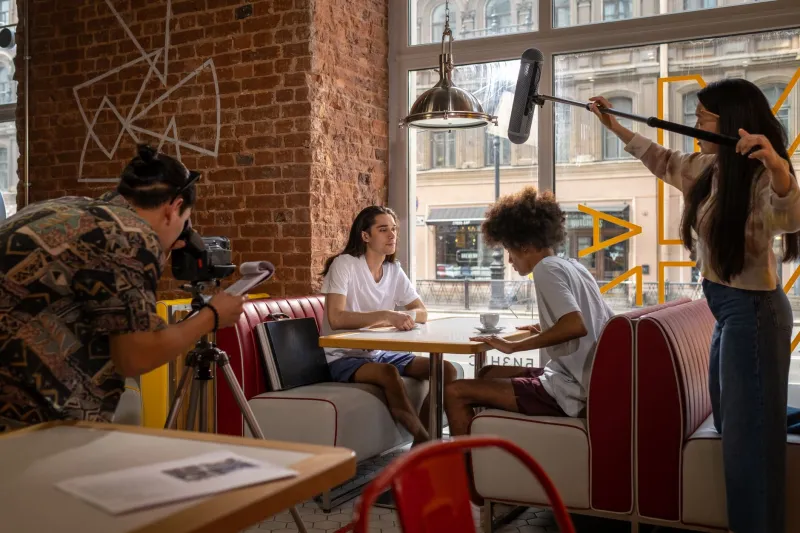
Photo by Photo by Jeffrey Zhang on Unsplash on Unsplash
There’s a particular kind of British optimism that arrives on a film set at 6.45am: the sky is grey, the forecast is worse, and somebody is already rigging a rain tower. On a mild morning in Cardiff, a small crew is preparing to turn a dry car park into a convincing downpour. The actors are in waterproofs. The gaffer is eyeing a bank of cloud. The SFX supervisor is checking the water supply like a chef checking stock.
“You don’t really make weather,” says Mara Ellison, a Cardiff-based special effects supervisor who has worked across BBC and Channel 4 dramas. “You make a version of it that the camera believes. That’s a different job.”
Reading the script for meteorological mood
Ellison’s first pass on a script is not about rain or snow. It’s about what the weather is doing to the character. A drizzle can be grief. A downpour can be confrontation. Weak, watery sun can be false hope. The same scene shot in bright June light and shot in a manufactured November squall becomes a different scene entirely.
Gaffers read for contrast. A sunny day is not simply “good weather”; it’s a set of decisions about bounce, glare, continuity and how much of the sky the camera can see. A British exterior often needs help looking British. “Borrowed sunlight” is the trade term for the mirrors, bounce boards and lights that push a patch of sun into a window or across a face when the real thing has gone missing.
Tom Pryce, a gaffer who splits his time between Leeds and London, says the first conversation is usually about honesty. “Producers will ask, ‘Can we wait for the weather?’ And you say, ‘We can wait, but we can’t promise it.’ The schedule needs a decision. Sometimes the decision is: today, we make the weather ourselves.”
Towers, blankets and very large mirrors
A rain tower is a vertical stand with nozzles, a pump and a tank. It sounds simple. It is not. The rain has to fall in a way that reads on camera, which means matching droplet size to lens choice, backlighting it so it shows up against darker backgrounds, and keeping it off the lens. Heavy movie rain, soft drizzle and backlit “hero rain” are different effects with different rigs.
Snow is its own small industry. Falling snow might be paper, foam or a biodegradable product that behaves well enough in front of a camera and not too badly on the ground. Ground snow is often a blanket or a dressed surface rather than a mountain of the real stuff. Wind rigs range from discreet fans to larger air movers, all of them subject to risk assessments because a convincing gust can also remove a light stand.
Then there is the sun-bounce kit: large frames, silver and white fabrics, mirrors on stands. A good gaffer can take a flat British afternoon and give it a glint. “The audience doesn’t need a heatwave,” Pryce says. “They need the feeling of one. A bounce in the right place is cheaper than a sunny day.”
The budget conversation
Practical weather is a line item, and it is rarely a small one. Rain means water storage, extraction, matting, cable protection, drying tents and crew time. Snow means dressing a location and then protecting the edges of the frame. Wind means safety checks and rehearsal. A rain sequence that looks effortless on screen can add thousands to a day’s budget, especially on a UK location where the ground is already wet and the power supply is already stretched.
In 2026, with production budgets under familiar pressure, the question is often not “Can we afford this?” but “Can we afford not to?” A scene that depends on a weather beat can lose its rhythm if the sky refuses to cooperate. Flexible scheduling helps. So does a director who knows which shots are weather-dependent and which are weather-cover.
“You build a day that can survive the forecast,” Ellison says. “If the rain comes, you shoot the rain. If it doesn’t, you shoot the scene that doesn’t care. The worst thing is pretending you can control the sky.”
Safety is the invisible effect
Water on set is a hazard before it is a look. Cables need protection. Tripods need weights. Actors need warm, dry places between takes. Cold water and long days are a bad combination, so costumes, changing areas and hot drinks become part of the effects plan. Snow products have to be checked for what they do to floors, drains and skin. Wind rigs have to be placed so that the only thing they move is the intended branch, coat or hair.
Sustainability has crept into the conversation too. Crews talk about recycling water where possible, choosing biodegradable snow, avoiding single-use plastics and using LED units where they can. None of it is glamorous. All of it is part of the same question: how do you make a fake storm without leaving a real mess?
The almost-real
The strange thing is that practical weather often sells better than a perfect digital version. Actors react to it. Umbrellas behave. Coats get heavy. Light changes through the rain. The audience may not know why a scene feels damp and miserable, but they believe it.
“You’re not creating the weather,” Ellison says. “You’re creating the evidence of it. Wet ground, a drip from a gutter, the sound of rain on a car roof. The camera does the rest.”
And then the cloud breaks, the crew applauds sarcastically, and somebody asks whether they should keep the rain tower up for the next shot. In Britain, the forecast is never just a forecast. It’s a creative decision.