Casting Call for a New Face: Inside the UK Workshops Where Prosthetics Get Personal
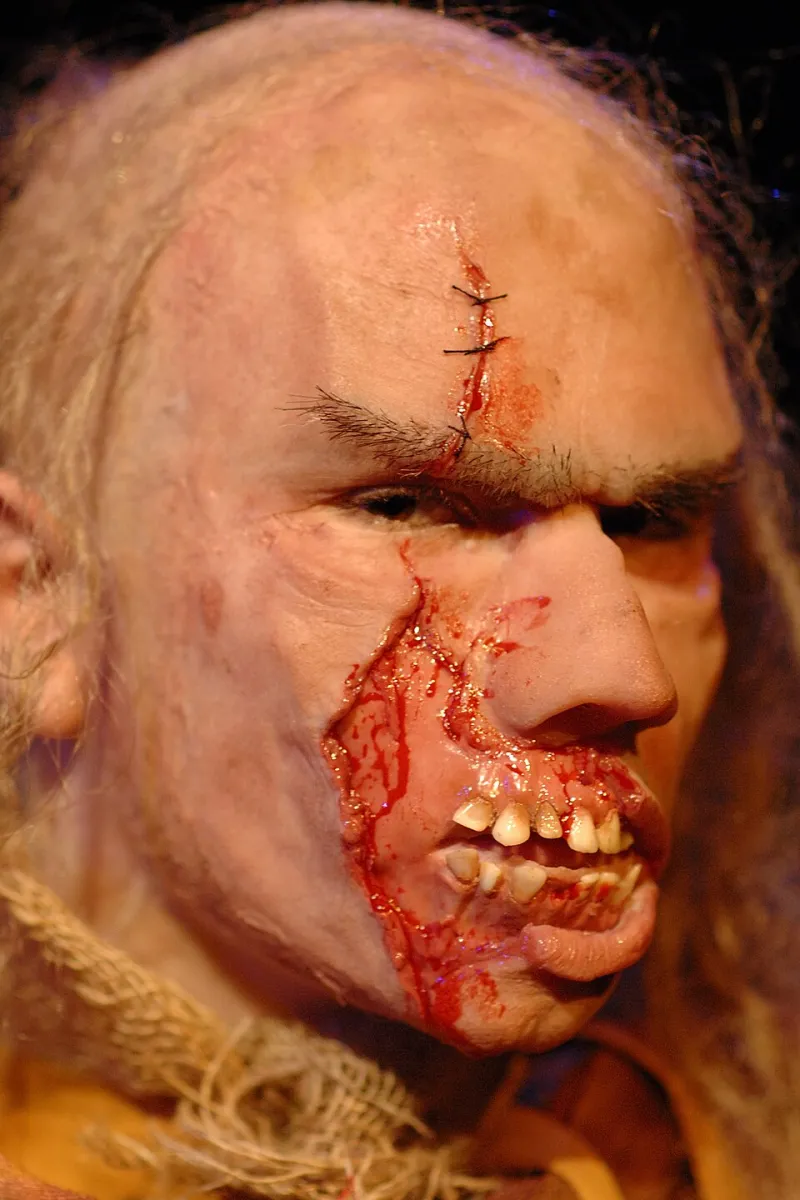
Photo: Uittenbogerd, CC BY 3.0, via Wikimedia Commons
The first thing you notice inside a prosthetic makeup house is the smell. Plaster dust, isopropyl alcohol, and a faint dental-surgery note that never quite leaves the corridor. The second thing you notice is the heads. They sit on shelves in rows, each one a lifecast with a name written on the neck in marker pen, each belonging to an actor who once spent half an hour lying very still with straws up their nose while alginate went off against their cheeks.
Welcome to the quiet corner of UK production where faces are rebuilt, ears are invented and leading actors are aged by three decades before lunch. It is part sculpture studio, part dental lab and part emergency service, and in 2026 it is busier and more compressed than ever.
It starts with a mould of somebody's face
Before any silicone is poured, an actor has to trust a room full of near-strangers to cover their face in goop. The best prosthetic supervisors talk about this like a host talking about a guest. You explain every step, you check the breathing, you keep the room calm. The lifecast is the foundation of everything that follows — get the brow wrong by a few millimetres and the whole performance sits slightly off.
From that negative, the workshop produces a positive: a plaster or resin bust of the actor's head and shoulders. It is uncanny to look at, slightly eerie to sit beside, and absolutely essential. Sculptors then build up clay on that bust — a heavier jaw here, a deeper eye socket there, a forehead that carries an extra twenty years of weather.
"You're not designing a mask," says one supervisor I speak to, who has spent more than two decades between London and the North West. "You're designing something an actor can act through. If it doesn't move with them, it's just a hat."
From clay to silicone, via a lot of paint tests
The sculpt gets moulded, the mould gets filled, and the workshop decides whether it is running silicone, foam latex or one of the newer encapsulated systems. Silicone gives you translucency and a skin-like stretch; foam is lighter and softer but less forgiving under close lenses. Either way, the piece comes out of the mould looking like a pale, faintly obscene pancake, which is why the painting stage matters so much.
Painters work in layers — base tone, capillaries, freckles, the tiny broken veins that make a nose look lived-in. They test under the same lighting the production will use, which these days can mean anything from candlelight to a wall of LED volume. A piece that looks beautiful in the workshop can turn into a shiny rubber forehead under a 4K close-up. So the tests keep happening, on camera, on the actor, with the director peering at a monitor and saying the thing every maker dreads: "Could we just take it down a touch?"
Twelve hours in a rubber forehead
Comfort is the unglamorous half of the craft. A prosthetic that takes three hours to apply and then makes the actor miserable by take four is a false economy. The workshop builds in cooling channels, breakaway edges and soft transitions at the hairline. Hands and necks get special attention because they move constantly and betray a bad blend faster than anything else.
Creature suits are their own discipline. Weight distribution, ventilation, sightlines, the ability to hear a director's note through a layer of foam — all of it gets engineered before anyone steps on set. On a twelve-hour day, the prosthetics assistant becomes a mix of nurse, technician and diplomat, armed with a tiny brush, a pot of colour and a battery-powered fan.
The best compliment a piece can get is silence. If the audience is thinking about the makeup, something has gone slightly wrong.
The schedule problem
Ask anyone in the sector what has changed and they will mention time. Prep windows have tightened, transformations have grown more ambitious, and the line between practical and digital has blurred. Producers increasingly ask for a hybrid: a physical piece for texture and lighting, with digital clean-up to take out seams or extend a shot. That is not a threat to the workshops so much as another thing to design around.
Costs have bitten, too. Silicone, resins and specialist pigments have all gone up, and the skilled hands who can sculpt a convincing earlobe are not quick to train. The pipeline from theatre makeup courses and art schools is healthy but small, and regional productions are increasingly looking to workshops outside the South East for both price and proximity.
The last-minute repair
On set, the kit travels in a case that looks like a make-up bag crossed with a first-aid box. Seams lift, edges shine, a stunt fall takes a nick out of a cheek. The prosthetics assistant repaints, re-blends and re-glues while the AD calls for another take. It is unflashy, high-pressure work, and it is the reason a transformation survives a full shooting day rather than just the camera test.
Back in the workshop, the heads go back on the shelf. Some will be reused, some will be archived, some will be quietly retired after a long shoot. The audience will remember the face on screen. The craft is in making sure they never stop to wonder how it got there.